
Programming technique · B3.1.3
Static and instance members
Class and instance members
Instance members belong to one object. Static members belong to the class as a whole and are shared rather than copied into every instance.
Instance attributes belong to one object. Class attributes belong to the class as a whole and are shared. Instance methods, class methods and static methods differ by what context they receive.
What you need to be able to do
Identify ownership
Decide whether a value belongs to one object or to the class as a whole.
Choose the right method type
Use instance behaviour when one object's state matters, and class-owned behaviour only when the responsibility genuinely belongs to the class.
Explain consequences
Predict what happens when state is accidentally shared or a method has the wrong ownership.
Start with one question: who owns this?
Look at this deliberately flawed GamePlayer design. Imagine creating Ana and Luis as two players.
If health and score describe each individual player, storing them at class level makes the design say something different: there is one shared health and one shared score for every player.
Diagnose the ownership bug
Answer each question before opening the model answer.
-
Should username belong to each GamePlayer object or to the GamePlayer class?
Reveal model answer
Each object. Ana and Luis need different usernames, so username is instance state.
-
If every player needs independent health, what is wrong with storing health at class level/static level?
Reveal model answer
There would be one shared health value rather than one value per player. Damage intended for one player could affect the shared state.
-
If takeDamage/take_damage changes one player’s health, should it be an instance method or a class-owned method?
Reveal model answer
An instance method, because it needs a particular receiving player and that player’s health.
Distinguish members by responsibility
| Question | Instance member | Class-owned member |
|---|---|---|
| Owner | One object | The class as a whole |
| Stored values | Normally one per object | One shared value |
| Typical access | first.summary() | RegistryUnit.getCreatedCount()RegistryUnit.get_created_count() |
| Suitable use | Identity or state that differs between objects | A genuine responsibility shared by the class |
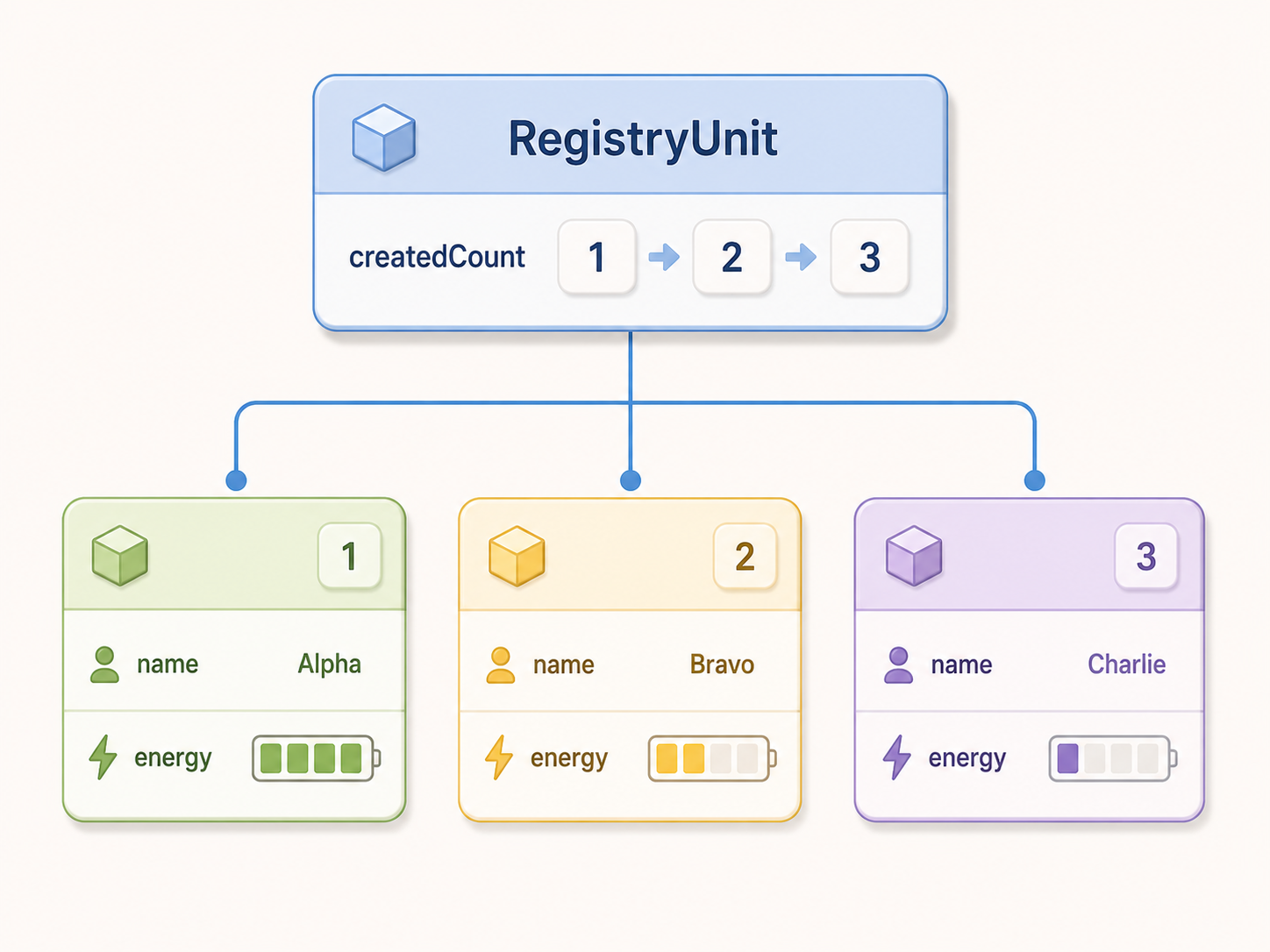
Class-owned does not mean constant
The shared count changes while remaining owned by the class.
Objects keep independent state
Ari and Sol must not share one name or energy value.
Use the class name
Shared state is clearest when accessed through RegistryUnit, not an arbitrary object.
Methods follow the same ownership decision
| Method kind | Use it when... | Java form | Python form |
|---|---|---|---|
| Instance method | The operation needs one object's state or identity. | ordinary non-static method; can use this | ordinary method; receives self |
| Class-owned method | The operation belongs to the class rather than one instance. | static method | @classmethod when class context/state is needed |
| Utility method | The logic is related to the class but needs neither object state nor class state. | often static | @staticmethod |
Python distinction: @classmethod receives the class as cls; @staticmethod receives neither self nor cls. They are not identical features, but both help separate class-related behaviour from behaviour that needs one object.
Java distinction: a static method has no receiving object and therefore cannot directly use instance fields through this.
Choose the member type
Decide ownership first; syntax comes second.
-
LibraryBook title: instance or class-owned?
Reveal model answer
Instance. Different book objects need different titles.
-
LibraryBook library_name, if every book belongs to the same one library in this program: could it be class-owned?
Reveal model answer
Possibly. If it is genuinely shared by every LibraryBook object and belongs to the class-wide model, class-owned state is defensible.
-
A created-count shared by every object: instance or class-owned?
Reveal model answer
Class-owned, because there should be one count for the class rather than a separate unrelated count in every object.
-
A method that reduces one player’s health: instance or static/class-owned?
Reveal model answer
Instance, because it must act on a particular player’s state.
-
A username-format checker that needs no player data: could it be static?
Reveal model answer
Yes. It is related utility logic but does not need one receiving object. In Python, @staticmethod is suitable for that pattern.
Apply ownership deliberately
In the challenge, justify every shared member. If you cannot explain why there should be exactly one class-owned value or behaviour, it probably belongs to the objects instead.
Challenges Choose one
Choose a challenge that feels appropriate for you. Code heat is only a rough estimate, not a fixed level.
Registry Unit Counter
SelectedComplete a RegistryUnit class with one class-owned created count and independent id, name and energy fields for every object. The constructor must update the shared count and assign the new value as the object's id. Create at least three objects, trace the count after each construction and distinguish the receiver-based summary method from the class-owned count reader.
Dice Roll Statistics
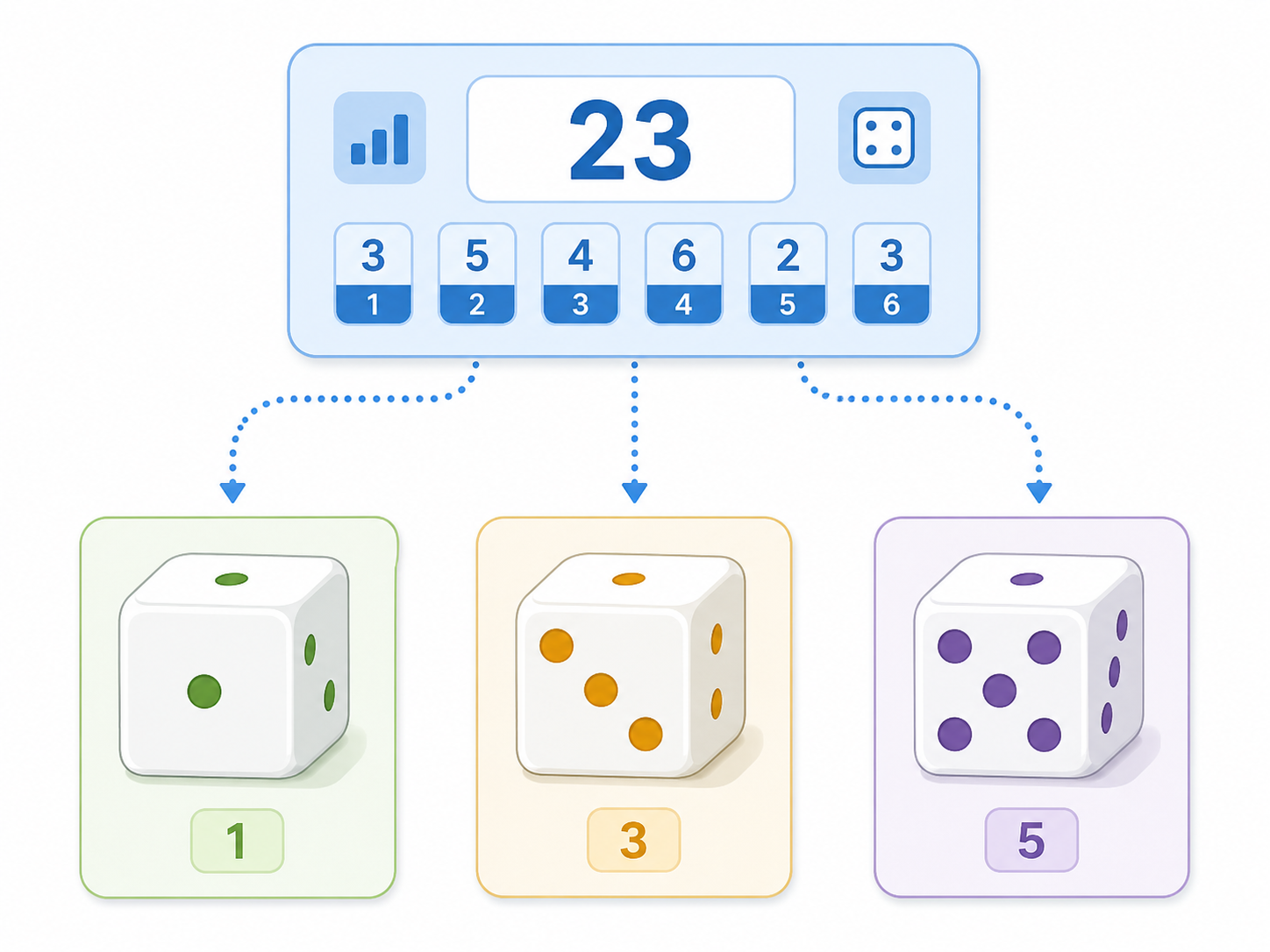
SelectedCreate a Dice class in which each object stores its own number of sides and current value, while one static totalRolls field counts rolls made by every Dice object. Roll dice of different sizes, display their independent values and prove that the shared total belongs to the class rather than one die.
Club Membership Counter
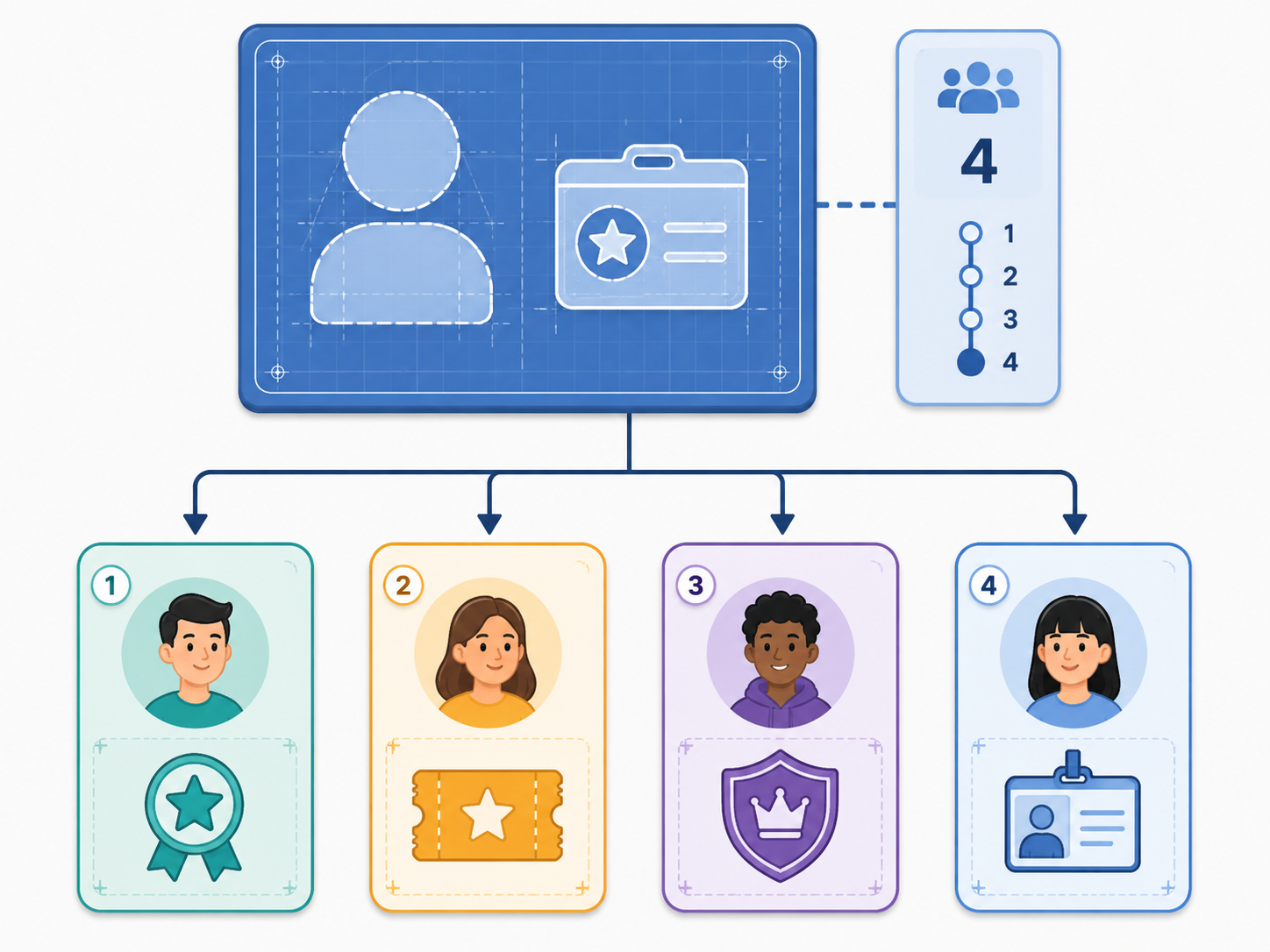
SelectedCreate a ClubMember class with independent memberId, name and yearGroup fields and one class-owned memberCount. Give each new object the next id during construction. Add an instance summary method and a static count reader, then explain why names and year groups must not be static.
Selected challenge
Write your first version by hand
Before opening your IDE, write your first attempt at this program on paper using Java. It does not need to be perfect.
TASK_CODE
Not marked complete. Mark it complete when your handwritten code is ready.
Open the challenge
Code Companion Local creates the starter file in the exact managed challenge folder and opens it in your preferred IDE. You do not need to create folders, files or run terminal commands.
Mark your handwritten code complete first.
If you are simply browsing the public course and are not using a class, complete the challenge in any editor you like. Code Companion Local is only needed for the connected classroom workflow.
Complete the challenge
Use your handwritten code as the starting point, then write and test your solution in the challenge workspace. Code Companion Local will ask you to compare the two versions before you submit.
Optional two-level scaffold
Try from your handwritten pseudocode first. Scaffold gives some structure; Scaffold + comments gives stronger guidance. Use only the level you need, and update your pseudocode first if the support changes your plan.